
FAQ
- public safety, emergency response, behavioral health services, code enforcement, and other police services;
- parks, trails, and recreation spaces with accessible restrooms and community programming;
- public facilities and infrastructure like paved roads, street signs, water and sewer systems;
- core service delivery and staffing for things like utility bill processing, court services, and permit processing;
- long-term maintenance and capital planning;
- community spaces and events that support connection and quality of life.
What is the City's budget outlook?
Although the City's budget is balanced for the next biennium, as required by law, our overall financial picture after then is less clear.
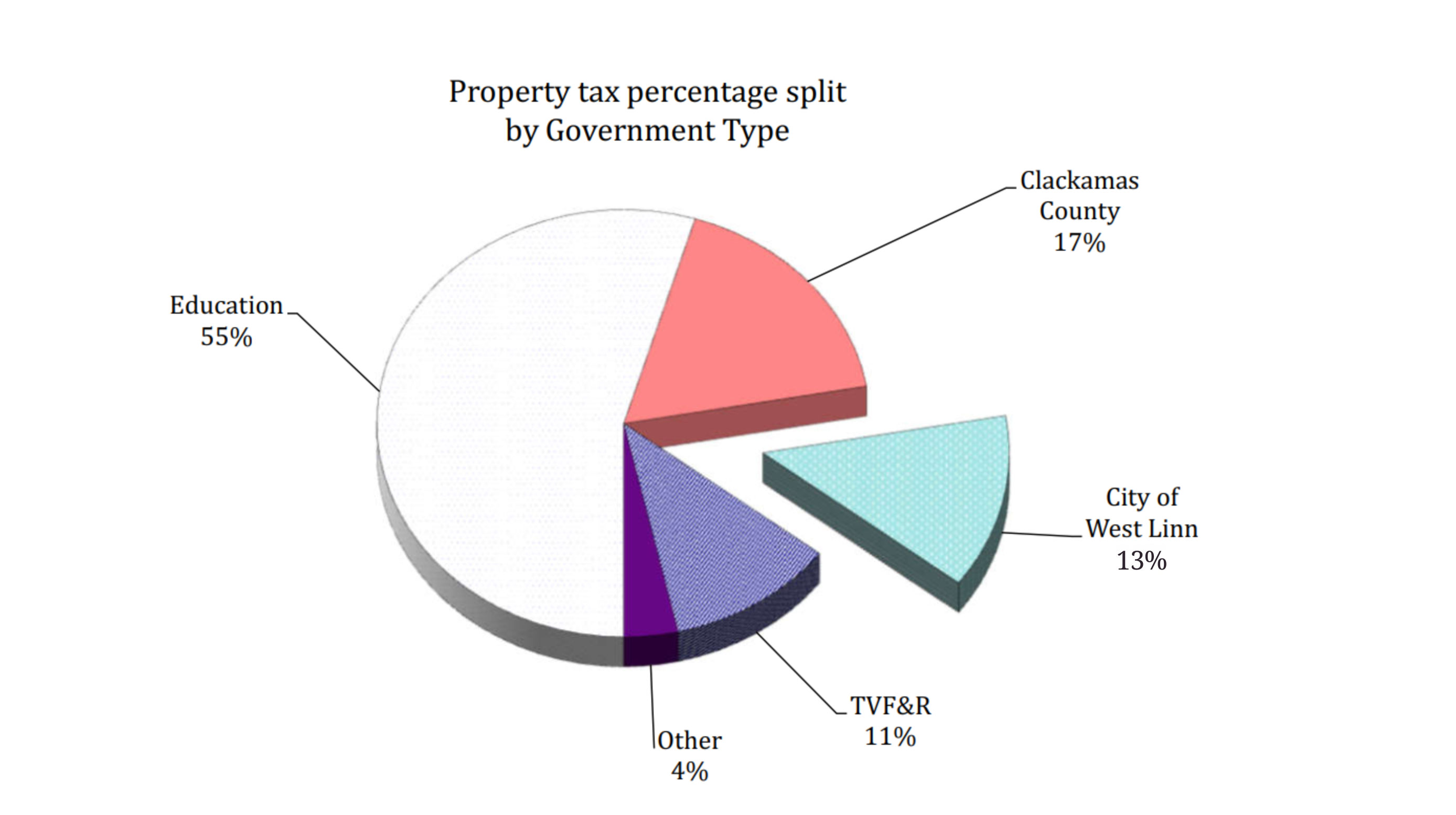
West Linn provides a wide range of services that residents rely on every day, including parks, streets, facilities, public safety, and community services. Despite the visibility of these services, the City receives only a small portion of the total taxes paid by residents (about 13 cents of every tax dollar you pay--the majority supports education, county services, and other districts). West Linn operates with one of the lowest permanent city property tax rates in the region, and Oregon’s property tax system limits how quickly that revenue can grow--no more than 3% of assessed property value annually. Also, some of the City’s utility rates are capped in a way that doesn’t reflect actual costs. This has caused us to fall behind on maintenance of key systems like water and streets.
While this structure has provided stability for taxpayers, it also means City revenues do not keep pace with rising costs for labor, materials, utilities, and long-term asset maintenance. Over time, this creates ongoing pressure on the City’s ability to maintain service levels, keep facilities and infrastructure in good condition, support a sustainable workforce, and plan proactively for the future. This is not a sudden crisis, but a gradual and compounding challenge that requires thoughtful, long-term planning.
Key context: Existing City revenue sources are constrained by state law and do not grow at the same rate as the cost of providing services.
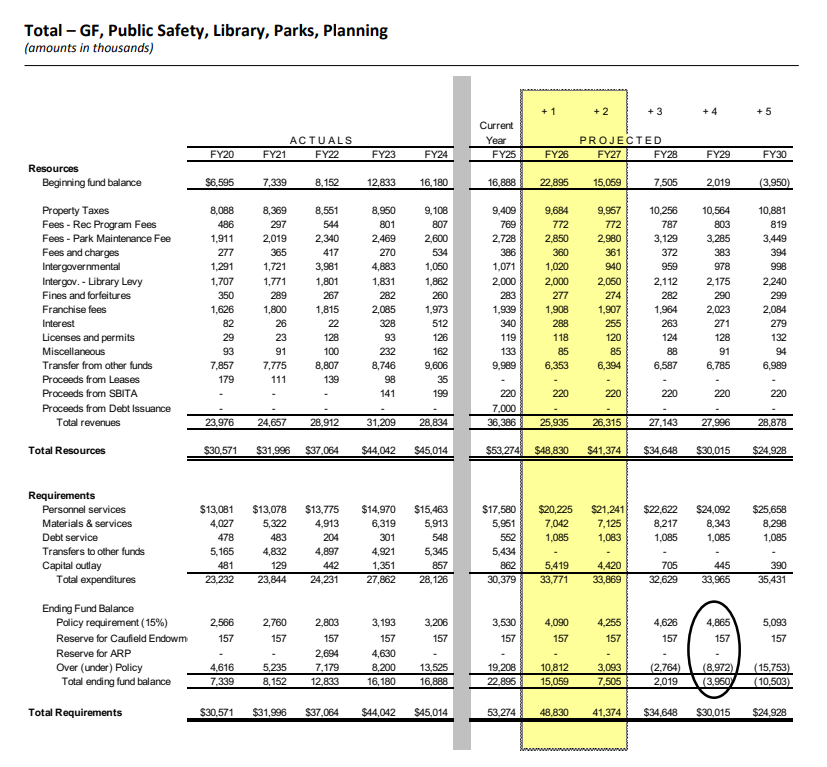
Source: 2026-27 Budget, Appendix 2
Why have this conversation now?
This is a hard time for many households financially, and public services are also feeling the pinch. Inflation is up 54% nationally since 2008 (CPI-U +54.1%), materials and labor costs are ever-increasing (ECI +57.6%; Mortenson Construction Cost Index +97%), and the City's ability to stretch a dollar, even with some of leanest staffing in the region (2026-27 Budget, pg. 22), is limited. The Parks utility fee, for example, funds only 83% of the real cost of this service, which is not sustainable indefinitely. Eventually either financial catch-up is needed, or services will need to be reduced.
Key context: With a possible budget shortfall within a few years, the time to talk about the future is now.
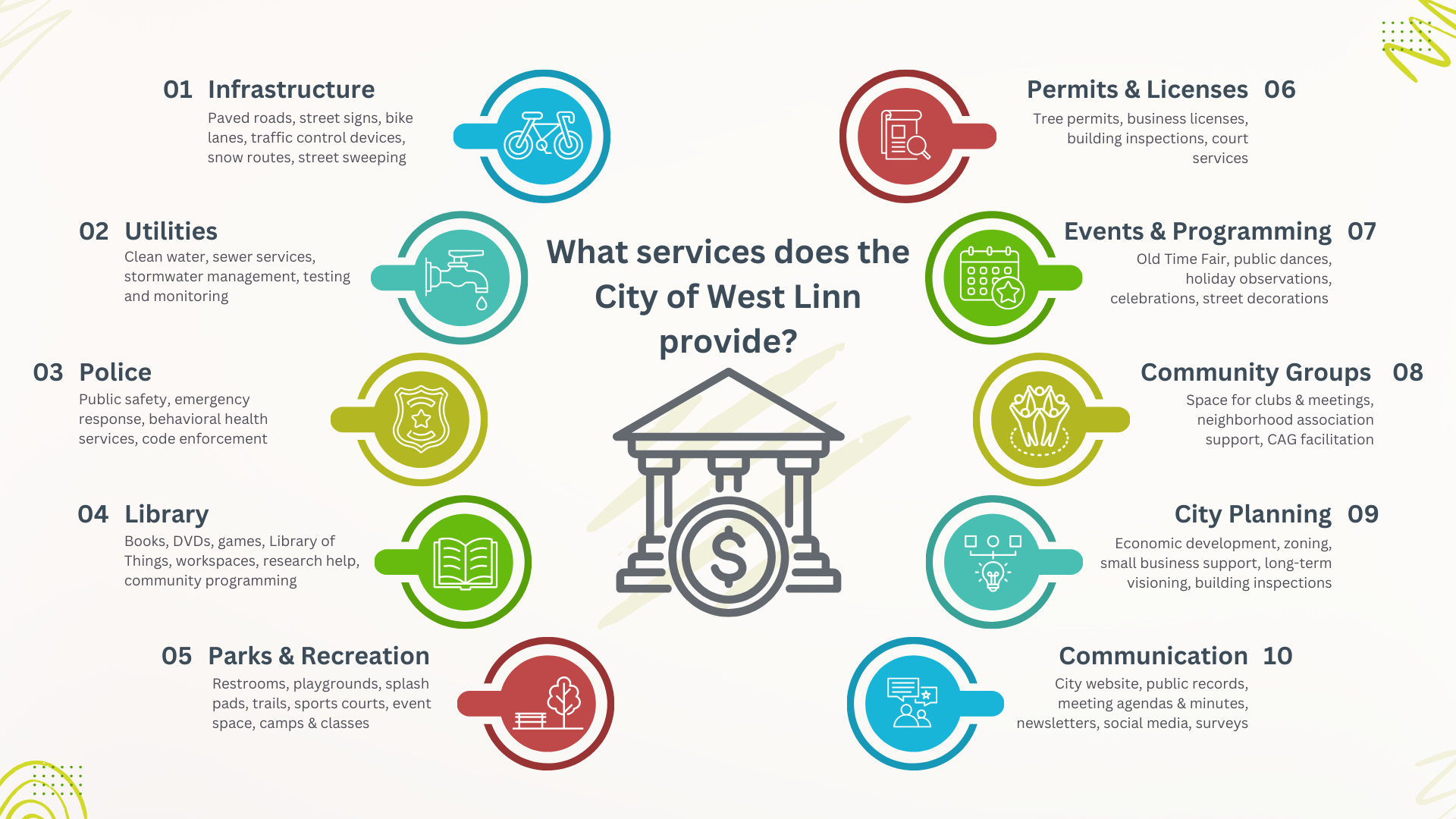
What services does the City currently offer?
Although we are considered a small city, West Linn is proud to offer as full a range of services as many larger cities despite leaner staffing. Some examples include:
Key context: We need to hear what current City services you value most so we understand how to prioritize against a limited budget.
We pay a lot in taxes. Where does it all go?
We hear you, this is a difficult time for many households financially. Many public services are also feeling the pinch.
West Linn has one of the lowest property tax rates in the region. You pay a lot in taxes, but only 13 cents of every tax dollar actually goes to the City. The rest goes to schools, county services, and other districts. This rate is capped to grow at no more than 3% of assessed property value (which is different from market value!) annually and can't be raised.
To compound this, West Linn lacks the industry and commercial base that often contributes disproportionately to a city's funding. Taken together, all this adds up to mean West Linn has been doing a lot with a little. We offer a full range of services found in larger cities, but costs continue to rise, and we need to talk about how to match desired services with available funding.
Key context: West Linn has less tax revenue to work with than you might think.
Don't high property values generate significant revenue compared to other cities?
While property market values in West Linn are relatively high, assessed values are much lower. West Linn’s average assessed value is not significantly higher than that of many surrounding cities. Real estate is expensive throughout the region, and the tax limitations adopted in the 1990s make a substantial difference by capping annual growth in assessed value at 3%.
Key context: High market property values do not result in high tax revenues in West Linn. As a bedroom community, we've long worked with less revenue than many believe.
How well staffed is West Linn compared to other cities?
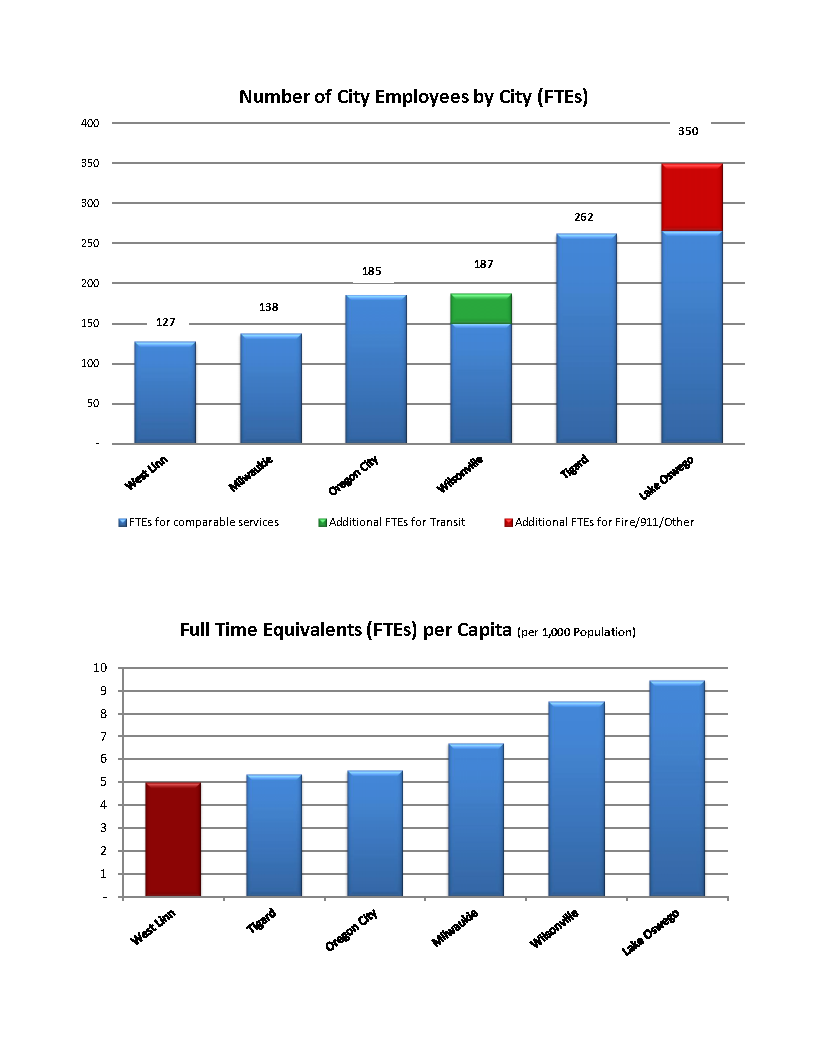
West Linn is proud to have done a lot with a little over the years. With only 5 full-time employees per 1,000 residents, we are leaner than any of our neighbors. We have many departments of one: one person to maintain all City buildings and facilities, one person to do all Citywide outreach and communications, one person to manage all City meetings and public records. For a few months in 2024, our IT department was one person as well!
For a helpful visualization, check out the graphs below from our annual budget report.
Key context: To live within our means, West Linn has fewer staff than its neighbors.
Is help available for households struggling to afford bills and service fees?
Absolutely! West Linn offers a Utility Assistance program for qualifying households. Download and complete the application any time of year for reduced water, sewer, surface water, street and park maintenance charges.
Key context: Every resident of West Linn belongs here, and we are committed to ensuring a high quality of life for all.
Where can I learn more about our financial big picture?
Explore our interactive Financial Dashboard, read past budget reports, follow City Council meetings, join the Budget Committee, read your free print copy of The Owl newsletter mailed to every home biannually, subscribe to our weekly digital newsletter, or simply follow this project for more.
Key context: Understanding municipal finance can be challenging, which is why we provide as many tools as we can to help.
How can I participate?
Following this project page is a great first step! Share your thoughts on our public question at the bottom of this page. Right now, we need to know what services the community values most, and what is less important. You can expect surveys, more project pages, community forums, public meetings, and more as the year progresses.
Key context: We need to hear from you! We welcome your ideas and feedback here and through all our channels.